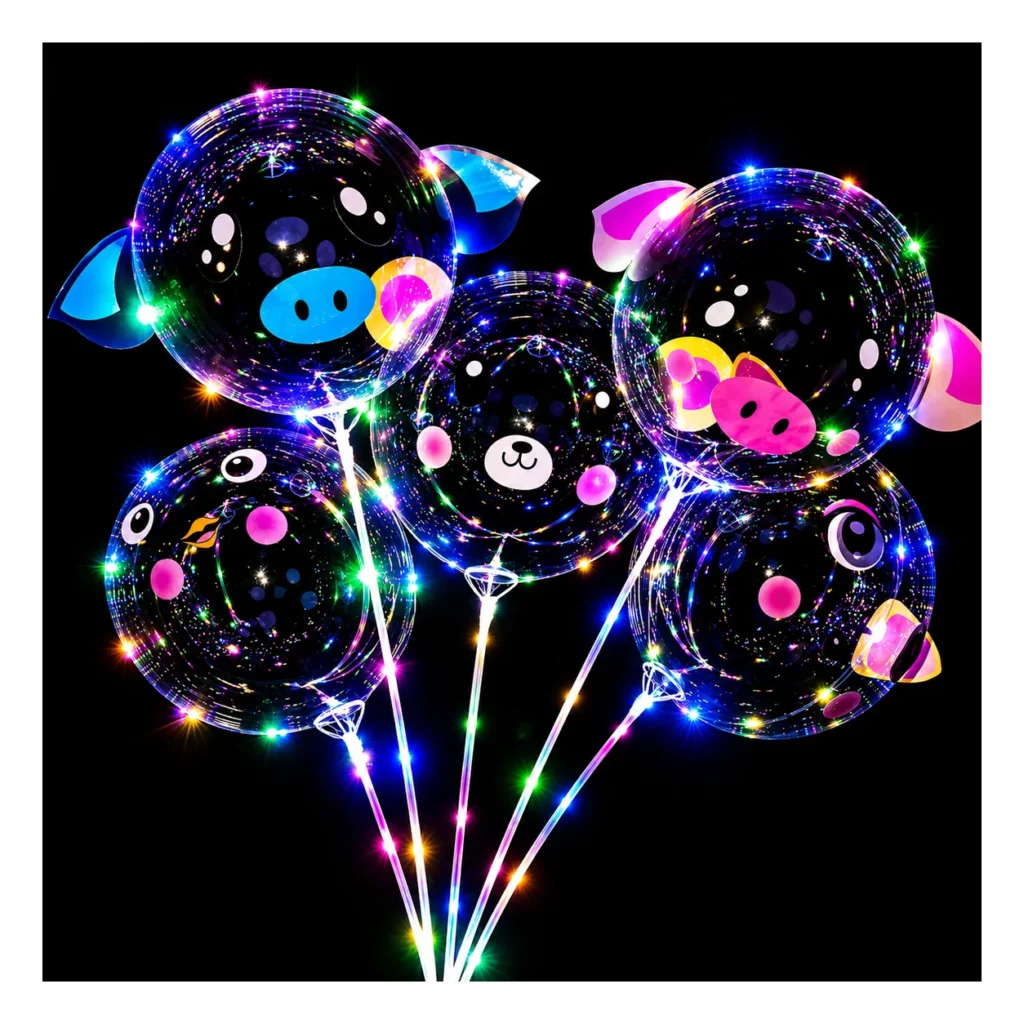
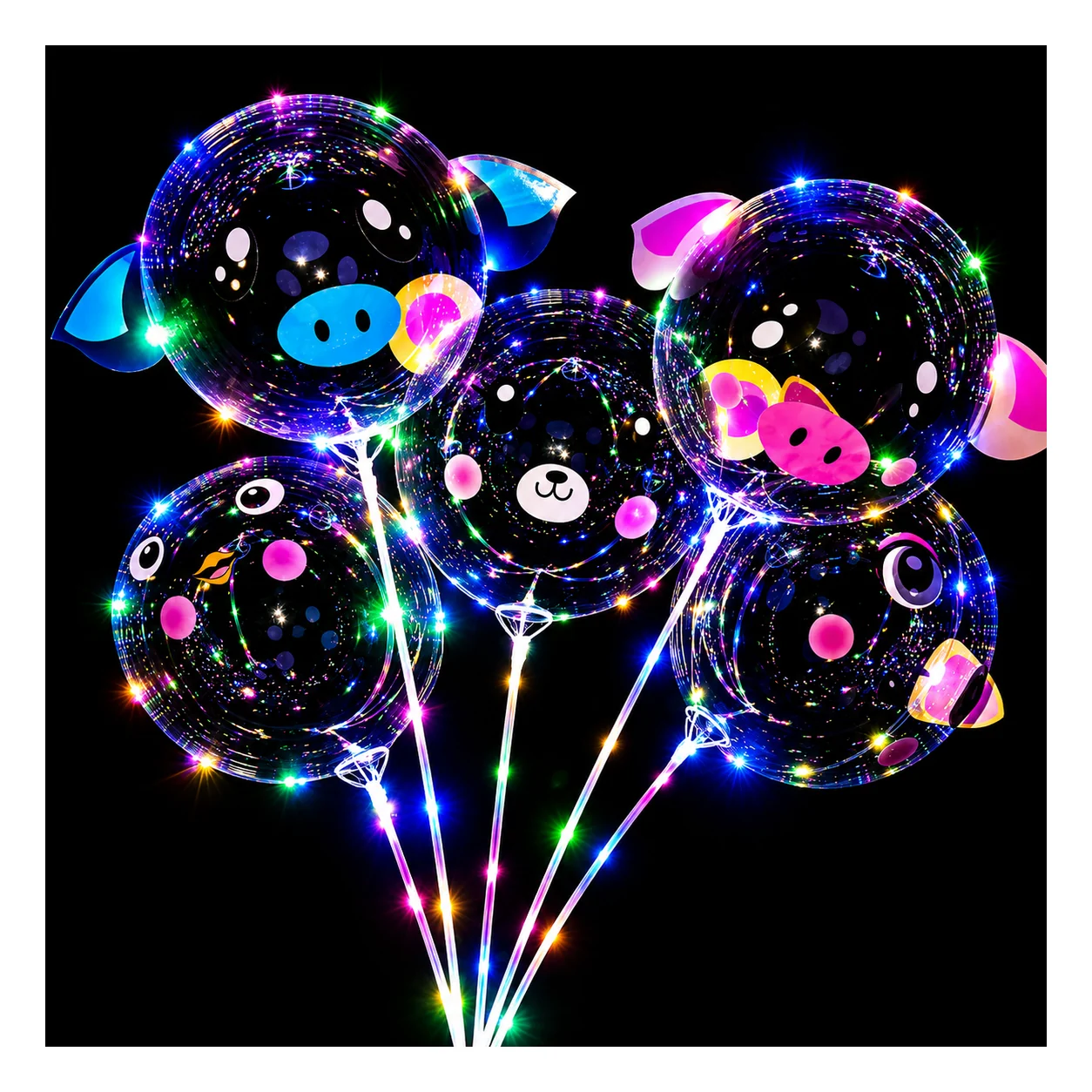
Bubble balloons are a product family rather than one specification. Transparent, printed, LED and decorative filled versions require different components and packaging, so buyers should define the finished retail concept before requesting a price.
Bubble balloon MOQ is confirmed by quotation. Importers should state size, transparency, design, included accessories, inflation method, packaging and destination so the supplier can assess a complete SKU.
Choose the bubble balloon format
Identify whether the product is a plain transparent bubble, printed design, LED version or kit with decorative contents. State the finished size and intended application.
If balloons will contain feathers, confetti, small balloons or artificial flowers, list those components separately. Do not assume the quoted balloon includes display accessories shown in a reference photo.
- Transparent or printed
- LED or non-LED
- Finished size
- Included contents
Confirm inflation and accessory requirements
Explain whether the product is used with air or helium according to its construction and size. Confirm valves, sealing method, sticks, ribbons, lights and battery arrangements where applicable.
Test every accessory with the approved balloon. LED wires, valves and decorative contents can affect assembly time and retail instructions.
- Inflation method
- Valve and seal
- Light components
- Assembly instructions
Protect the product in packaging
Bubble material can crease or scratch, while small kit components can be lost. Define inner protection, pieces per pack, label, barcode and instruction requirements.
For retail kits, use a component list. For bulk balloons, specify folding and carton pressure limits so products arrive usable.
- Inner protection
- Pieces per pack
- Label and instructions
- Carton arrangement
Use a product-specific inspection plan
Inspect dimensions, transparency, printing, seams, valves and package count against the approved sample. For kits, count and test included accessories.
Use inflation sampling appropriate to the product and record defects by SKU. Carton checks should confirm that colors and designs match the packing list.
- Visual inspection
- Seam and valve check
- Inflation sample
- Kit and carton count
Prepare a supplier brief
Summarize the chosen product, size or component specification, colors or designs, quantity by SKU, selling-unit packaging and destination in one document. Attach reference images only as supporting material and identify any feature that is still optional. A structured brief reduces assumptions and makes quotations from different suppliers easier to compare.
Ask the supplier to return the confirmed specification with the quotation and to list exclusions, substitutions and buyer-supplied artwork. Before production, align the approved sample, label, barcode, inner carton and export carton with the same SKU record. This creates a practical reference for production, inspection and repeat orders.
- Product and specification
- Quantity by SKU
- Packaging and destination
- Approved quotation record
Buyer checklist
- Transparent or printed
- LED or non-LED
- Finished size
- Included contents
- Inflation method
- Valve and seal
- Light components
- Assembly instructions
- Inner protection
- Pieces per pack
- Label and instructions
- Carton arrangement
- Visual inspection
- Seam and valve check
- Inflation sample
- Kit and carton count
- Product and specification
- Quantity by SKU
- Packaging and destination
- Approved quotation record
Buyer FAQ
What information is needed for a quotation?
Provide the product type, specifications, quantity, packaging and destination.
Can products be mixed?
Mixed orders can be discussed, while production requirements remain subject to each SKU.
How should quality be confirmed?
Use an approved specification and check product, packaging and carton records before shipment.
Related wholesale buying resources
Continue with specifications, packaging and importer guidance related to this product or category.